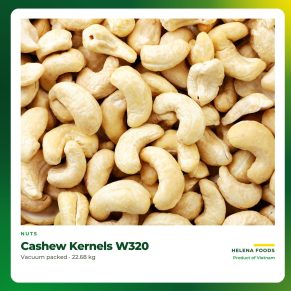
Ten desk checks to run on a sample of high quality Vietnam cashew nuts before you approve it: kernel count per kg, colour, broken pieces, scorched kernels, moisture feel, taste and rancidity, foreign matter, testa remnants, vacuum integrity and lot code, each with a method, a pass signal and what to do if it fails.
Cashew Kernels
What food service operators, repackers, bakeries and snack-mix blenders should specify when they buy bulk roasted cashew kernels: grade and broken ratio after roasting, roast colour and oil, salt level, moisture, nitrogen-flushed packing and shelf life, with a use-versus-specification table and how Helena Foods produces roasted kernels at partner plants in Vietnam.
Organic cashew is a certification chain, not a grade. This guide explains the farm, processor and transaction certificates behind an organic lot, why certified volume in Vietnam is limited, where the price premium comes from, how to buy certified lots correctly, and where Helena Foods’ conventional standard range stands.
Three contract clauses carry most of the risk in a cashew export deal: the Incoterm, the payment instrument and the inspection clause. This guide explains FOB, CFR and CIF with a who-pays-what table, compares T/T and letter of credit, covers COA and independent testing options, and sets out marine insurance basics for buyers.
A plant visit is only as useful as the checklist carried into it. This audit guide covers hygiene zoning, pest control, metal detection, moisture control, traceability, the certifications a plant holds, worker safety and laboratory access, with the evidence to request for each, and explains how Helena’s QC model covers the same points.
White is the top AFI colour class and W320 the benchmark count. This guide explains white, scorched and dessert kernels, the commonly cited tolerances for serious damage and total defects, how they appear on a COA, and the snack, manufacturing and private-label uses of W320 white cashew kernels supplied by Helena Foods.
W240 is quoted above W320 in every market, and the premium is structural. This guide explains the drivers without quoting a figure: the limited share of large kernels in a raw nut lot, breakage during processing, gifting and retail demand, seasonality, packing and contract terms, then lists what a complete quotation request contains.
Most cashew exporters work with processing plants rather than own them, so the useful question is what records the plant produces. This walk-through follows a cashew lot from raw nut intake to release, names the QC record at each stage, highlights the three records that matter most and shows where Helena QC fits in.
Roasted cashews raise decisions that raw kernels do not: dry or oil roast, roast colour, salt and flavour, and packaging that keeps oxygen away from the oils. It matches roast profiles to uses, explains how colour and seasoning are fixed on the specification sheet, and shows how Helena Foods supplies roasted cashews under your brand.
In the trade, raw cashew nuts (RCN) are in-shell nuts sold to processing plants, while raw kernels are shelled, unroasted white wholes such as W320 and W240. This guide compares the two commodities, explains who buys each, gives the specification and document set for raw kernels and states clearly which one Helena Foods supplies.