
- Your cart is empty
- Continue shopping


-
Admin
- Posted on
- Categories:Instant Coffee
Every instant coffee export company Vietnam is home to works through the same sequence: contract, production, quality documents, customs declaration and loading. The difference between a smooth arrival and a container held at destination is whether the documents match the cargo exactly, down to the lot code and seal number. This article describes the process from the exporter’s desk, the document each step produces, and how Helena Foods runs it with one contact person per order.
Instant coffee export company Vietnam: what the exporter actually does
An instant coffee export company in Vietnam arranges production to the buyer’s specification, verifies each lot with a certificate of analysis (COA), declares the goods for export under HS code 2101.11, books and stuffs a dry container and issues the document set the importer needs to clear customs. The exporter is responsible for making the cargo and the paperwork describe the same thing.
The import side of the same shipment, including importer registration and duties, is covered in our guide to importing instant coffee under HS 2101. This article stays on the Vietnamese side of the water.
Step by step: from signed contract to bill of lading
The table lists the nine steps as they happen and the document each one produces. Most problems at destination can be traced to a document issued at the wrong step, or issued from memory rather than from the packing list.
| Step | What happens | Document produced |
|---|---|---|
| 1. Enquiry and specification | Product, format, packing and parameters agreed | Specification sheet |
| 2. Quotation | Incoterm and payment terms offered | Proforma invoice (PI) |
| 3. Contract | Terms confirmed, payment arranged as contracted | Sales contract |
| 4. Production | Extraction, drying and packing with QC present | Production records, lot code |
| 5. Quality verification | Lot tested against the specification | COA; SGS or Eurofins report on request |
| 6. Export customs declaration | Goods declared under HS 2101.11 | Customs declaration |
| 7. Booking and loading | Container inspected, stuffed, sealed | Booking confirmation, packing list with container and seal numbers |
| 8. Shipping documents | Issued after departure | Commercial invoice, packing list, bill of lading, certificate of origin |
| 9. Destination-specific papers | Issued if the importer’s broker requires them | Health certificate, certificate of free sale, fumigation certificate |
HS code 2101.11 and the classification question
Spray-dried and freeze-dried instant coffee is classified under HS 2101.11, extracts, essences and concentrates of coffee. The exporter declares that code in Vietnam, and the importer declares the equivalent national tariff line at destination. Mixes that contain creamer and sugar, such as 3-in-1 sachets, may fall under a different subheading because they are preparations based on coffee extract rather than the extract itself. In every case the importer’s customs broker should confirm the code before the goods ship, since duty rates and import requirements follow from it.
Dry container loading: 25 kg bags in 20ft and 40ft
Instant coffee ships in a dry container, not a reefer. The standard pack is a 25 kg bag with a sealed inner liner, and a 20ft container takes about 6.6 tonnes; the 20ft container load guide shows how that figure is built up. Before stuffing, the exporter inspects the container for cleanliness, dryness, odour and holes, because spray-dried powder absorbs both moisture and smells. The seal number is recorded on the packing list and bill of lading, and bags are counted per pallet so the packing list can be verified at destination without opening a bag.
Labelling basics on export packaging
Bulk bags carry the product name, net weight, lot code, production or best-before date, country of origin (Product of Vietnam), storage instructions and the exporter’s name. Retail packs produced under private label also carry the ingredient list, importer details and the language or nutrition requirements of the destination market, confirmed by the buyer before artwork approval. A lot code on the bag that does not appear on the packing list is a common reason for a shipment to be held for inspection.
One contact, one document set: how Helena runs the order
Helena has exported Vietnamese agricultural products since 2016 to buyers in 55+ countries, and Helena Foods applies the same model to instant coffee: one contact person is in charge of the order from specification to arrival. QC staff are at the partner plant during production and packing, every lot ships with a COA, and independent testing by SGS or Eurofins can be arranged before loading, as set out on the quality page.
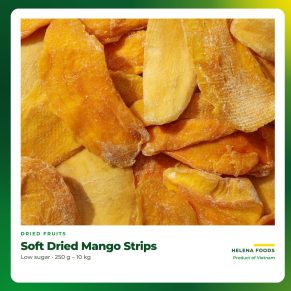
Because the company also exports dried fruits, nuts and frozen fruit, bulk spray-dried instant coffee can be consolidated with soft dried mango and other dried fruits in one dry container under one set of export documents. For a buyer otherwise managing two suppliers and two document sets, that is the practical meaning of one partner for coffee and food.
Frequently asked questions
Which documents does the importer receive?
Commercial invoice, packing list, bill of lading, certificate of origin and the COA for each lot, plus any destination-specific papers the importer’s broker requests, such as a health certificate, certificate of free sale or fumigation certificate. Independent SGS or Eurofins reports are added when the buyer has requested them.
Who confirms the HS code?
The exporter declares HS 2101.11 for spray-dried and freeze-dried instant coffee on the Vietnamese export declaration. The importer’s customs broker confirms the national tariff line at destination, including for 3-in-1 mixes, which may be classified differently. Confirm before shipment, because duties and import requirements follow from the code.
Can coffee and food products travel in the same container?
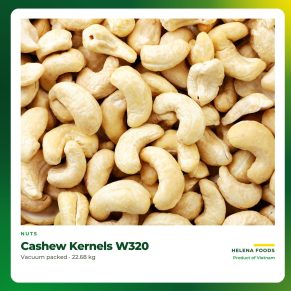
Yes, when both are dry goods. Instant coffee, dried fruits and cashew kernels can share a dry 20ft or 40ft container with one set of export documents and one contact person in charge. Frozen durian pulp and passion fruit puree need a reefer container and travel separately.
What separates one instant coffee export company Vietnam offers from another?
Not the product list, which is similar across plants, but the paperwork discipline: a COA for every lot, a packing list built from the bags actually loaded, lot codes that match across bag, COA and invoice, and independent SGS or Eurofins testing available before loading. One contact person who owns the order from specification to arrival is the other difference.
Request a quotation and document set
Tell Helena Foods your product, destination and Incoterm, and we will send a specification sheet, a quotation and the document set your market requires. Samples are available on request; MOQ, lead time and prices are quoted per order. Contact us to request a quote.
