
- Your cart is empty
- Continue shopping


-
Admin
- Posted on
- Categories:Dried Fruits
Most distributors enter tropical dried fruits wholesale with a single product, usually mango, and discover that one SKU is the hardest range to sell: it fills a shelf slot without creating a category. Three fruits from the same source, packed to the same standard and arriving in the same container, give a retailer a reason to list a brand rather than a bag.
This article is about assortment planning: which products sell together, pack sizes, how to align shelf lives across the range, how a mixed container is loaded, and whether to sell under your own label or the Helena brand.
Why build a tropical dried fruits wholesale range rather than a single SKU?
A tropical dried fruits wholesale range of mango, jackfruit and banana gives retailers a shelf block instead of a single item, spreads supply across fruits with different seasons, and fills a container efficiently. Because all three can come from the same partner plants under one specification system, the range shares one document set, one QC model and one contact person.
Which products sell together
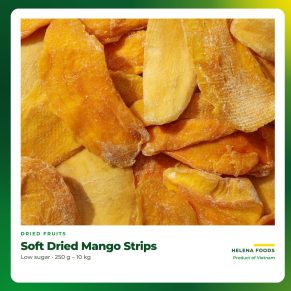
Mango is the anchor. It is the most recognised tropical dried fruit, the product buyers already know how to price, and the largest line by volume as soft dried mango strips. A range is built outwards from it.
Jackfruit is the differentiator. Few shoppers have tasted it, so it carries the curiosity that gets a range noticed, and it needs sampling more than advertising. Banana is the familiar, value-led third, bought for families and lunchboxes, with chips as a crisp counterpart to the chewy soft dried fruits.
The pairing logic is texture as much as fruit: chewy soft dried mango, jackfruit and banana on one side, crisp banana and jackfruit chips on the other. Both groups come from the same dried fruits range. Where the snacking category is heading is discussed in dried fruit market trends.
A range plan for the first container
| Tier | Product and form | Entry format | Role in the range | Note |
|---|---|---|---|---|
| Core | Soft dried mango strips | 500 g pouches or boxes in export cartons | Volume and recognition | Bulk cartons on request for repacking |
| Core | Soft dried banana, slices or halves | Pouches per spec sheet | Value, family purchase | Variety sets colour and flavour |
| Differentiator | Soft dried jackfruit | Pouches per spec sheet | Trial and distinctiveness | Budget for sampling |
| Crisp line | Banana chips, jackfruit chips | Bags per spec sheet | Texture contrast | Fragile; rigid cartons on top of the pallet |
| Later | Ingredient dices; unsweetened mango to order | Bulk cartons | Manufacturing and health positioning | Added once the core sells through |
Pack sizes and shelf-life alignment
Pack size should follow the channel, but keeping one weight across the range simplifies shelf pricing, carton design and pallet planning. Mango is packed in 500 g pouches or boxes; jackfruit and banana pack sizes are confirmed on the spec sheet, and matching them to the mango format is usually the simplest starting point.
Shelf life is where ranges go wrong. Soft dried mango is typically given about 12 months in sealed packaging, cool and dry; jackfruit, banana and chips each carry their own figure on the spec sheet, and chips depend heavily on the barrier of the bag. Plan the container so every SKU’s best-before date falls inside one sell-through window: order the shortest-dated product in the smallest quantity, rotate stock first in, first out, and store everything cool and dry. The storage and packaging principles are set out in dried mango shelf life, storage and packaging.
Mixed container loading
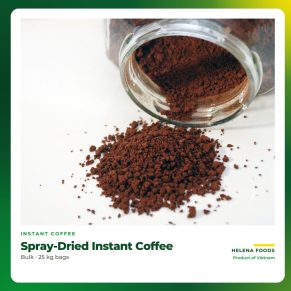
A tropical dried fruits wholesale range ships in one dry 20ft / 40ft container. Cartons are palletised by product with the lot code visible on the outside, heavier soft dried cartons below and fragile chip cartons on top. Cashew kernels or bulk instant coffee can fill the remaining space, so the first container does not have to be all fruit. One set of export documents covers the load: commercial invoice, packing list, bill of lading, certificate of origin and a certificate of analysis for every lot, with SGS or Eurofins testing before loading available on request.
Private label or Helena brand
Both are possible, and they can be mixed in one container. Own-label packs follow the OEM process: specification and sample, quotation, contract or proforma invoice, production with QC at the plant, then loading and documents, with artwork and label text agreed before production starts; the steps are described on the OEM and private label page. The Helena brand is the faster start when you want to test the range before investing in artwork. A common pattern is own label on the core mango and banana lines and Helena brand on jackfruit while trial volumes are small.
Frequently asked questions
Do I have to start with all three fruits?
No. Many distributors start with mango and one other fruit and add the third once the first container has sold through. What matters is planning the range from the start, so pack sizes, artwork and shelf lives are compatible when the third product arrives, rather than designing each SKU in isolation.
Can the pack size be the same across the range?
Usually. Mango is packed in 500 g pouches or boxes, and jackfruit and banana packing is agreed on the spec sheet, so a common weight across the three fruits can be written in from the start. Chips are lighter for the same volume, so their bag size is set by volume rather than matched by weight.
Can own-label and Helena-brand products share one container?
Yes. Each product has its own spec sheet, lot code and COA regardless of the label, and the commercial invoice, packing list and bill of lading cover the container as a whole. Mixing labels is a normal way to launch a range when artwork for some products is ready and others are still being tested.
How are shelf lives kept aligned on repeat orders?
By ordering against the production calendar and the spec sheet. Each lot’s production date is in the lot code, so the best-before date of every SKU is known at loading. Reorder the shortest-dated product more often and in smaller quantities, and compare each new COA with the previous one to confirm nothing has drifted.
Request a quote or sample
Tell Helena Foods which fruits and formats you want in the range, the pack size and the destination, and you will receive PDF spec sheets, sample options and a quotation for a tropical dried fruits wholesale programme built around one container. Contact us to start.
