
- Your cart is empty
- Continue shopping


-
Admin
- Posted on
- Categories:Cashew Kernels
To import cashew nuts from Vietnam you need four things in order: a specification the supplier can produce against, the correct customs classification, a complete set of export documents, and whatever registration your own country requires of food importers. None of this is difficult, but a missing phytosanitary certificate or an unregistered consignee can hold a container at the port.
This guide walks through a first container of W320 or W240 kernels, from HS code to clearance. It also explains how Helena Foods simplifies the paperwork by issuing one set of documents for coffee and food products shipped together.
What do you need to import cashew nuts from Vietnam?
To import cashew nuts from Vietnam, a buyer needs an agreed specification sheet, a commercial invoice and packing list, a bill of lading, a certificate of origin, a certificate of analysis for the lot, and a phytosanitary or fumigation certificate where the destination requires one. The goods are classified under HS code 0801.32 and ship in a dry container.
Importer-side registration is covered below. Confirm it with your customs broker before the goods are shipped, not after.
HS code for cashew kernels
Shelled cashew kernels are classified under HS code 0801.32 (cashew nuts, shelled). Roasted or salted kernels are generally classified elsewhere as prepared nuts, so the code depends on what you actually buy. Use 0801.32 as the starting point and confirm the national tariff line and duty rate with your broker; some countries apply preferential rates to goods of Vietnamese origin under trade agreements.
Export documents from the supplier
The supplier prepares the documents that let the goods leave Vietnam and clear at destination. For a cashew shipment the standard set is:
- Commercial invoice showing grade, quantity, Incoterm and value.
- Packing list with carton count, net and gross weight and lot codes.
- Bill of lading (B/L) or sea waybill issued by the shipping line.
- Certificate of origin, in the form your country requires for any preferential tariff.
- Certificate of analysis (COA) for the lot, stating kernel size, moisture and broken ratio.
- Phytosanitary certificate and fumigation certificate, where the destination requires them.
- Independent laboratory report from SGS or Eurofins, if requested before loading.
Ask for draft documents before the vessel sails. Correcting a consignee name on a bill of lading after departure is slow and expensive.
Container, packing and labelling
Cashew kernels ship in a dry 20ft or 40ft container. No refrigeration is needed, but the container should be clean, dry and free of odour. Kernels are vacuum-packed in flexible bags inside export cartons; the industry-standard pack is two 25 lb (11.34 kg) vacuum bags per carton, a 22.68 kg (50 lb) carton, and Helena states the carton weight for your order on request.
Carton labelling should show product name and grade, net weight, lot code, production date and origin, plus any importer details your market requires. Retail label content for private-label packs is agreed under the OEM arrangement before production.
Importer-side requirements
Every market regulates food imports differently, but the pattern is similar: the importer is registered as a food business, gives advance notice of the consignment, and holds the documents that prove the food is safe and correctly labelled. In the United States, for example, FDA food facility registration applies to foreign producers and prior notice is filed before arrival; raise both with your supplier before contracting.
European importers typically register with their national food authority and may face official controls at the border. Your broker will know the current rules; the supplier’s job is to make sure the documents exist.
Import checklist
| Step | Who | Document or action | Notes |
|---|---|---|---|
| 1. Agree specification | Buyer and supplier | Spec sheet, sample | Grade, moisture, broken ratio, packing |
| 2. Confirm classification | Buyer’s broker | HS 0801.32 and national tariff line | Check preferential origin rules |
| 3. Register as importer | Buyer | Food business registration, prior notice where required | Market-specific |
| 4. Contract and PI | Both | Proforma invoice, Incoterm, shipment window | MOQ and lead time confirmed |
| 5. Production and QC | Supplier | QC at plant, COA, optional SGS or Eurofins | Lot code assigned |
| 6. Booking and loading | Supplier | Dry 20ft or 40ft container | Carton weight on request |
| 7. Documents | Supplier | Invoice, packing list, B/L, C/O, COA, phyto or fumigation | Drafts checked before sailing |
| 8. Clearance | Buyer’s broker | Entry declaration, duties, inspection if selected | Keep COA and lot code on file |
| 9. Receipt | Buyer | Carton count, seal check, sample against spec | Store cool, dry and dark |
One set of documents for coffee and food
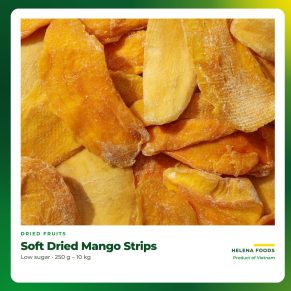
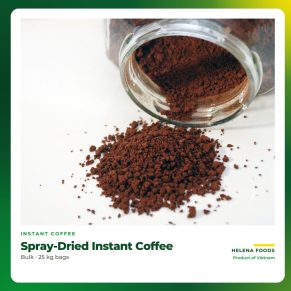
Buyers who also purchase instant coffee or dried fruit can consolidate them with cashew in one dry container, with one set of export documents and one contact person in charge of the order. This is Helena’s “one partner for coffee and food” model, which removes duplicated paperwork. Spray-dried instant coffee, for example, ships in the same container as cashew kernels. The order routine, from inquiry to shipment, is described under how we work, and the quality steps behind the COA on the quality page.
Frequently asked questions
What is the HS code for cashew kernels?
Shelled cashew kernels are generally classified under HS code 0801.32. The six-digit code is international, but each country adds its own digits and duty rate, and roasted or salted kernels may be classified differently as prepared nuts. Confirm the full tariff line with your customs broker before the goods are invoiced, so that the documents match the declaration.
Do cashew kernels need a phytosanitary certificate?
It depends on the destination. Many countries require a phytosanitary certificate for plant products, and some also require a fumigation certificate for nuts. Both are issued in Vietnam before shipment, so tell your supplier which certificates your market needs when you place the order. Helena includes them in the document set when they are required.
Can I import cashew nuts from Vietnam in a shared container?
Yes. Cashew kernels travel in a dry container and can be loaded with other dry goods such as instant coffee or soft dried mango from the same supplier, under one set of documents. Frozen products need a reefer container and ship separately.
Request a quote / sample
Ready to import cashew nuts from Vietnam? Send your destination port, grade and quantity, and Helena Foods will return a specification sheet, a quotation and a list of the documents your market needs; MOQ and lead time are confirmed per order. Start from the W320 cashew kernels page or contact us.
